

Smart EV Facility Cleaning: How Green Products Protect Your Equipment and the Planet
Transform EV facility maintenance with eco-certified cleaning solutions from Mustang Hygiene that protect both sensitive electrical components and environmental integrity. Implement biodegradable degreasers specifically formulated for charging stations and maintenance bays, eliminating harmful chemical residues while ensuring optimal equipment performance. Deploy microfiber-based cleaning systems that reduce water consumption by 90% compared to traditional methods, while effectively removing industrial particulates and maintaining pristine facility conditions.
The convergence of sustainable practices and EV facility maintenance represents a critical evolution in the clean energy sector. Modern EV facilities require specialized cleaning protocols that address unique challenges: protecting delicate electrical components, maintaining safety standards, and upholding environmental commitments. By adopting eco-friendly cleaning solutions, facilities not only enhance their operational efficiency but also strengthen their position as leaders in sustainable transportation infrastructure.
This comprehensive approach to green facility maintenance integrates advanced cleaning technologies with environmental stewardship, setting new standards for the EV industry while ensuring long-term operational success.
The Unique Cleaning Challenges of EV Facilities
High-Voltage Areas and Safety Considerations
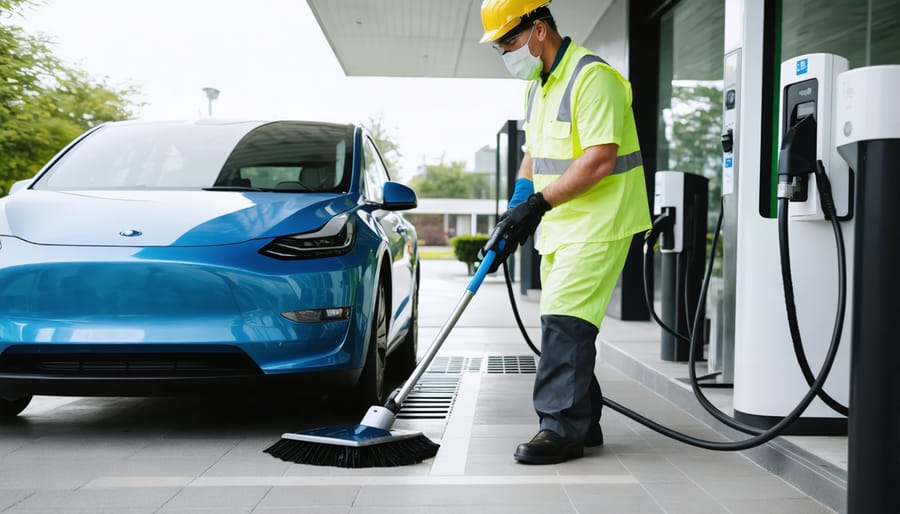
High-voltage areas in EV facilities require specialized cleaning protocols to ensure both safety and equipment longevity. When addressing EV charger maintenance requirements, technicians must use non-conductive cleaning solutions and tools specifically designed for electrical environments. All cleaning personnel should wear appropriate Personal Protective Equipment (PPE), including insulated gloves and non-conductive footwear.
Maintain a minimum safe distance of 3 feet from exposed electrical components while cleaning, and never use water-based solutions near live equipment. Instead, opt for specialized eco-friendly, non-conductive cleaners that are specifically formulated for high-voltage environments. These solutions should be applied using microfiber cloths or other non-abrasive materials that won’t generate static electricity.
Always ensure that charging equipment is powered down and properly locked out before performing any detailed cleaning procedures. Establish clear communication protocols and warning signage during cleaning operations to prevent accidental power-ups. Regular safety training and certification for cleaning staff is essential to maintain both environmental standards and workplace safety.
Common Contaminants in EV Facilities
EV maintenance facilities face unique contamination challenges due to their specialized operations. Common contaminants include conductive metal dust from brake wear, copper particles from electrical components, and carbon deposits from various mechanical interfaces. These facilities also regularly encounter lithium residue from battery handling and servicing, which requires particular attention due to its reactive nature.
Environmental contaminants like road salt, mud, and organic debris are frequently tracked into service areas, while industrial lubricants, coolants, and specialized EV fluids can create persistent residues on floors and work surfaces. High-voltage components generate static electricity, which attracts and holds fine particulate matter, making regular cleaning essential for both safety and maintenance.
Chemical residues from traditional cleaning products can accumulate over time, potentially interfering with sensitive electronic equipment. Additionally, micro-particles from composite materials used in EV construction require specific cleaning protocols to prevent cross-contamination. Understanding these contaminants is crucial for developing effective, eco-friendly cleaning strategies that protect both the facility infrastructure and the sophisticated equipment within it.
Eco-Friendly Cleaning Solutions for Different Facility Areas
Charging Station Maintenance
Maintaining EV charging equipment requires specific eco-friendly cleaning solutions that ensure both equipment longevity and environmental responsibility. When implementing charging station safety protocols, it’s essential to use cleaning products that are both effective and sustainable.
For smart charging equipment, biodegradable cleaners with neutral pH levels (6.5-7.5) are recommended to prevent corrosion and maintain electrical safety. Look for cleaning solutions certified by recognized environmental organizations, such as Green Seal or EcoLogo, which contain naturally derived surfactants and are free from harmful volatile organic compounds (VOCs).
Key cleaning products should include:
– Alcohol-based screen cleaners (minimum 70% isopropyl alcohol) for display interfaces
– Plant-based multipurpose cleaners for external housing
– Enzymatic cleaners for tough grime and oil residue
– Microfiber cloths for streak-free results
Avoid harsh chemical cleaners containing ammonia, bleach, or abrasive materials, as these can damage protective coatings and electronic components. When cleaning charging connectors, use approved electronic contact cleaners that evaporate without leaving residue. Always ensure cleaning products are compatible with the manufacturer’s specifications and maintain detailed cleaning logs to track maintenance activities.
Workshop and Service Areas
Workshop and maintenance areas in EV facilities require specialized eco-friendly cleaning solutions that maintain both cleanliness and environmental responsibility. These spaces often deal with various substances, including oils, lubricants, and coolants, necessitating effective yet sustainable cleaning approaches.
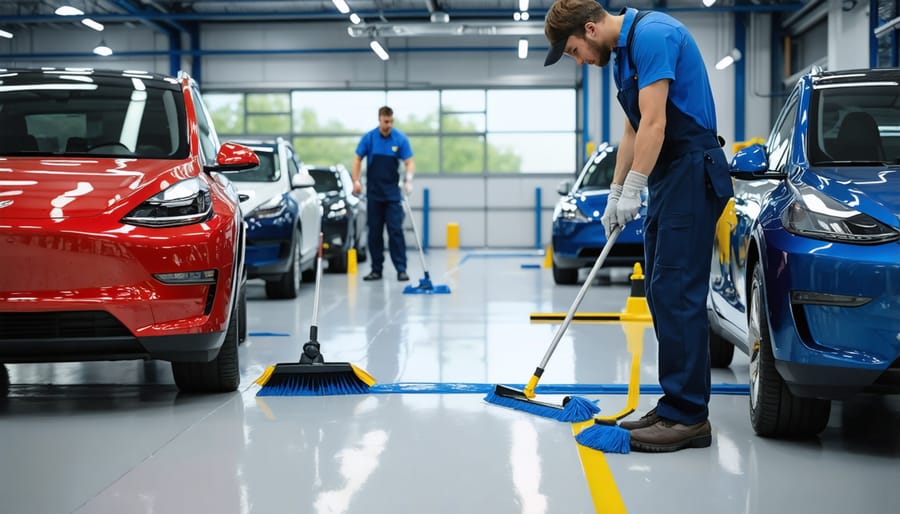
For floor cleaning, biodegradable enzymatic cleaners effectively break down oil and grease without harsh chemicals. These solutions are particularly effective when combined with microfiber mops and reusable absorbent materials, reducing waste while ensuring thorough cleaning. Installing oil-water separators helps filter contaminated water before disposal, allowing for water recycling and proper waste management.
Work benches and tool storage areas benefit from plant-based cleaning solutions enhanced with natural antimicrobial agents like tea tree oil or citrus extracts. These alternatives eliminate harmful bacteria while avoiding toxic residues commonly associated with traditional industrial cleaners.
For parts washing stations, water-based cleaning systems with ultrasonic technology offer an environmentally conscious alternative to solvent-based cleaners. These systems use biodegradable detergents and recirculating water systems, significantly reducing water consumption and hazardous waste generation.
Implementing proper ventilation systems with HEPA filters helps maintain air quality while capturing particulate matter. Additionally, using compressed air cleaning equipment with moisture separators and oil filters ensures clean, efficient operation while minimizing environmental impact.
Regular maintenance schedules using these green solutions not only protect the environment but also create healthier working conditions for technicians and staff.
Storage and Administrative Spaces
Storage and administrative spaces in EV facilities require specific eco-friendly cleaning protocols to maintain a healthy work environment while minimizing environmental impact. Implement microfiber cleaning systems for dust control on surfaces, shelving, and equipment storage areas, as these materials require less water and fewer cleaning agents while capturing more particles effectively.
For flooring in storage areas, opt for plant-based cleaning solutions and mechanical scrubbing methods that reduce chemical usage. Install walk-off mats at entrances to prevent dirt accumulation and decrease cleaning frequency. Administrative spaces benefit from natural cleaning alternatives like vinegar-based solutions for glass surfaces and citrus-based cleaners for desks and workstations.
Document storage areas require special attention to humidity control and dust prevention. Use HEPA-filtered vacuum systems to maintain air quality and prevent paper degradation. Choose cleaning products with zero VOC emissions to protect both stored materials and indoor air quality.
Implement a waste sorting system in administrative areas to facilitate recycling and proper disposal of cleaning materials. Use refillable cleaning supply stations to reduce plastic waste, and maintain a digital cleaning log to track product usage and effectiveness.
Consider installing sensor-based lighting and ventilation systems that operate only when spaces are in use, reducing the accumulation of dust and the frequency of required cleaning interventions.
Implementing a Sustainable Cleaning Program
Staff Training and Safety Protocols
Implementing proper staff training protocols is essential for maintaining both safety and effectiveness when using eco-friendly cleaning products in EV facilities. All personnel should undergo comprehensive training that covers product-specific handling, application techniques, and electrical safety considerations unique to EV environments.
Training programs should emphasize the correct dilution ratios for concentrated green cleaning solutions and proper application methods to maximize effectiveness while minimizing waste. Staff must be educated on identifying appropriate cleaning products for different surfaces and components, ensuring compatibility with sensitive electrical equipment.
Personal protective equipment (PPE) requirements remain crucial even with eco-friendly products. Workers should wear appropriate gloves, eye protection, and protective clothing as specified in safety data sheets. Regular safety briefings should address potential hazards, emergency procedures, and proper storage of cleaning materials.
Documentation plays a vital role in maintaining safety standards. Facilities should maintain detailed records of training sessions, safety incidents, and product usage. This documentation helps track compliance and identifies areas for improvement in cleaning protocols.
Cross-contamination prevention measures should be emphasized, including proper tool sanitization and the use of color-coded cleaning equipment for different facility areas. Staff should also be trained in proper disposal methods for eco-friendly cleaning products and materials, ensuring compliance with environmental regulations.
Regular assessments and refresher courses help maintain high standards and keep staff updated on new sustainable cleaning technologies and methodologies. This ongoing education ensures that cleaning practices remain both environmentally responsible and effectively maintain the facility’s cleanliness and safety standards.
Monitoring and Documentation
Effective monitoring and documentation are crucial components of eco-friendly cleaning programs in EV facilities. Modern facilities employ integrated digital management systems that track cleaning schedules, product usage, and environmental impact metrics in real-time. These systems typically include IoT sensors that measure air quality, water consumption, and waste generation, providing valuable data for optimization.
Facility managers should implement a comprehensive documentation protocol that includes detailed cleaning logs, product inventory tracking, and environmental performance indicators. Key metrics to monitor include water usage per cleaning session, VOC levels, energy consumption during cleaning operations, and waste reduction achievements. Regular analysis of these metrics helps identify areas for improvement and validates the effectiveness of green cleaning practices.
Quality assurance protocols should incorporate regular environmental audits and cleaning effectiveness assessments. This includes surface testing for cleanliness, monitoring indoor air quality, and evaluating the condition of EV charging equipment after cleaning. Documentation should also track the training and certification of cleaning staff in eco-friendly practices.
Advanced facilities are increasingly adopting blockchain technology to maintain transparent records of their environmental compliance and cleaning protocols. This creates an immutable record of cleaning activities and environmental performance that can be shared with stakeholders and regulatory bodies.
Regular reporting should include monthly sustainability scorecards that highlight key environmental achievements, areas needing improvement, and progress toward sustainability goals. These reports help demonstrate ROI for green cleaning initiatives while ensuring continuous improvement in facility maintenance practices.
The Business Case for Green Cleaning
Implementing eco-friendly cleaning practices in EV facilities isn’t just environmentally responsible – it’s a smart business decision that yields substantial returns on investment. Green cleaning solutions typically reduce water consumption by 30-50% compared to traditional methods, leading to significant cost savings in utility bills and resource management.
These environmentally conscious practices also contribute to extended equipment lifespan. By using non-corrosive, biodegradable cleaning agents, facilities can minimize wear on sensitive charging equipment and maintenance infrastructure. This preventive approach can reduce replacement costs and maintenance frequency by up to 25%.
Employee health benefits represent another crucial advantage. Green cleaning products, which eliminate harsh chemicals and volatile organic compounds (VOCs), result in improved air quality and fewer respiratory issues among staff. Studies show this can lead to reduced sick days and increased productivity, with some facilities reporting a 15% decrease in health-related absences.
Marketing advantages shouldn’t be overlooked either. As consumers become increasingly environmentally conscious, maintaining a green facility enhances brand reputation and customer loyalty. Many businesses report up to a 20% increase in customer satisfaction scores after implementing and promoting their eco-friendly initiatives.
The initial investment in green cleaning equipment and products is often offset within 12-18 months through reduced water consumption, lower chemical costs, and decreased maintenance requirements. Additionally, many regions offer tax incentives and certifications for businesses implementing sustainable practices, providing further financial benefits.
When considering long-term operational costs, green cleaning practices typically result in a 10-15% reduction in overall facility maintenance expenses while supporting environmental compliance and corporate sustainability goals.
The shift toward eco-friendly cleaning practices in EV facilities represents a crucial step in achieving comprehensive sustainability in the electric vehicle industry. By implementing green cleaning protocols, utilizing biodegradable products, and adopting water-efficient methods, facilities can significantly reduce their environmental impact while maintaining optimal operational standards. The integration of automated cleaning systems, combined with environmentally conscious cleaning agents, demonstrates that efficiency and sustainability can work hand in hand.
As the EV sector continues to grow, the adoption of these practices becomes increasingly important for both environmental stewardship and operational excellence. Facility managers who embrace these eco-friendly cleaning solutions not only contribute to environmental protection but also often realize cost savings through reduced water consumption, improved energy efficiency, and extended equipment life spans.
Moving forward, it’s essential for EV facilities to continually evaluate and update their cleaning protocols, staying current with emerging green technologies and sustainable practices. By making this commitment to environmental responsibility, facilities can play a vital role in advancing the clean energy transition while setting new standards for sustainable industrial maintenance.
