
How EV Charging Infrastructure Affects Your Fire-Damaged House Resale Value
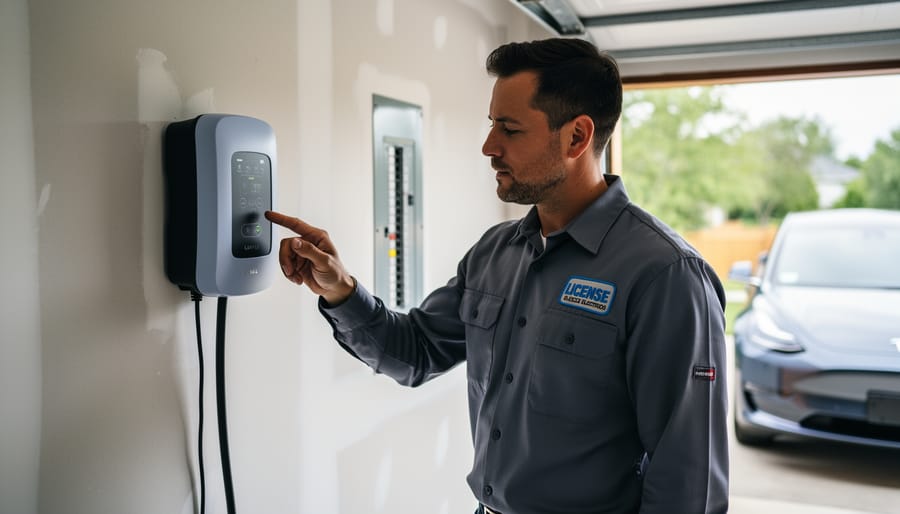
Assess your fire-damaged property’s electrical systems immediately, prioritizing a certified inspection of all EV charging infrastructure before listing. Property Saviour specialists recommend documenting whether the charging equipment was involved in the incident, as this directly impacts disclosure obligations and liability considerations. Modern Level 2 charging stations with integrated safety features—including ground-fault protection and thermal monitoring—can actually enhance resale value when properly inspected and certified post-incident, particularly as electric vehicle adoption accelerates across residential markets.
Engage a qualified electrician to evaluate whether existing charging infrastructure sustained damage, requires replacement, or can be recertified to current safety standards. This technical assessment determines whether the system represents an asset worth highlighting to environmentally conscious buyers or a liability requiring removal. Documentation proves critical: obtain written certification confirming all electrical components meet National Electrical Code requirements, especially if the charging station was unrelated to the fire’s origin.
Consider upgrading to cutting-edge bidirectional charging technology during restoration, transforming potential concerns into competitive advantages. Contemporary vehicle-to-grid systems with advanced thermal management and automatic shut-off capabilities address buyer safety concerns while positioning the property as future-ready infrastructure. Transparent disclosure of fire history alongside certified, modernized EV charging demonstrates responsible stewardship and appeals to sustainability-focused purchasers willing to pay premiums for properly engineered energy solutions. Strategic positioning converts perceived obstacles into differentiated selling points within an increasingly electrified automotive landscape.
Understanding Fire Risk and EV Charging Systems
Built-in Safety Features of Modern EV Chargers
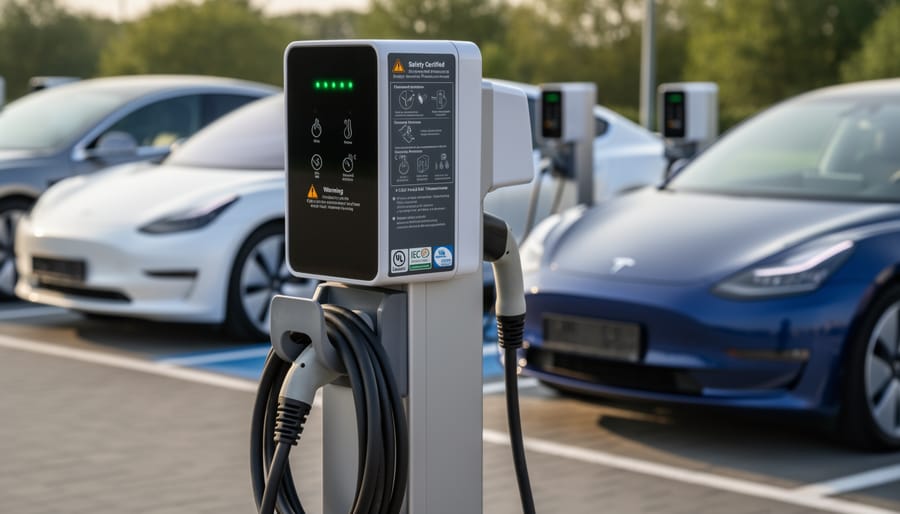
Contemporary EV charging equipment incorporates multiple layers of protection designed to prevent electrical incidents and fire hazards. Understanding these safety mechanisms is particularly relevant for homeowners dealing with fire-damaged properties, as modern systems differ significantly from older electrical installations.
Circuit breakers in today’s smart EV chargers provide the first line of defense by automatically interrupting power flow when detecting current overloads or short circuits. These dedicated breakers are specifically rated for EV charging loads, typically 40 to 60 amperes, preventing wiring from exceeding safe temperature thresholds.
Ground Fault Circuit Interrupter (GFCI) protection is a mandatory safety feature that monitors electrical current flowing to and from the vehicle. When the system detects even minor imbalances indicating current leakage—often as small as 5 milliamperes—it cuts power within milliseconds, eliminating shock and fire risks from damaged cables or moisture intrusion.
Thermal monitoring systems continuously track temperature at critical connection points, including the charging plug, cable, and wall connection. If temperatures exceed predetermined safe limits, the system automatically reduces charging current or shuts down completely, preventing overheating that could lead to fire.
Modern chargers also feature automatic shut-off capabilities that respond to various fault conditions, including voltage irregularities, communication errors with the vehicle, or internal component failures. These intelligent safety systems represent significant advancements over basic electrical circuits, substantially reducing fire risks when properly installed and maintained by qualified electricians following current electrical codes.
Installation Standards That Prevent Fire Hazards
Modern EV charging installations must comply with rigorous electrical codes to mitigate electrical safety concerns, particularly crucial when considering fire-damaged properties. The National Electrical Code (NEC) Article 625 establishes baseline requirements for electric vehicle supply equipment, mandating dedicated circuits with appropriate overcurrent protection and ground-fault circuit interrupters. Professional installations require certified electricians to conduct comprehensive load calculations, ensuring the existing electrical panel can accommodate the additional demand without overloading circuits—a primary fire risk factor.
Proper wiring standards include using appropriately rated conductors, typically 6 AWG copper for Level 2 chargers operating at 240 volts and 40 amps. Load management systems represent cutting-edge technology that dynamically balances power distribution, preventing circuit overloads during peak demand periods. These intelligent systems communicate with your home’s electrical infrastructure to optimize charging schedules and maintain safe operating parameters.
Installation certification through organizations like the Electric Vehicle Infrastructure Training Program (EVITP) ensures technicians possess specialized knowledge beyond general electrical work. Documentation from certified installers provides essential verification for insurance claims, property disclosures, and buyer confidence when selling fire-affected properties with EV charging infrastructure.
Assessing EV Charging Equipment After Fire Damage
Professional Inspection Requirements
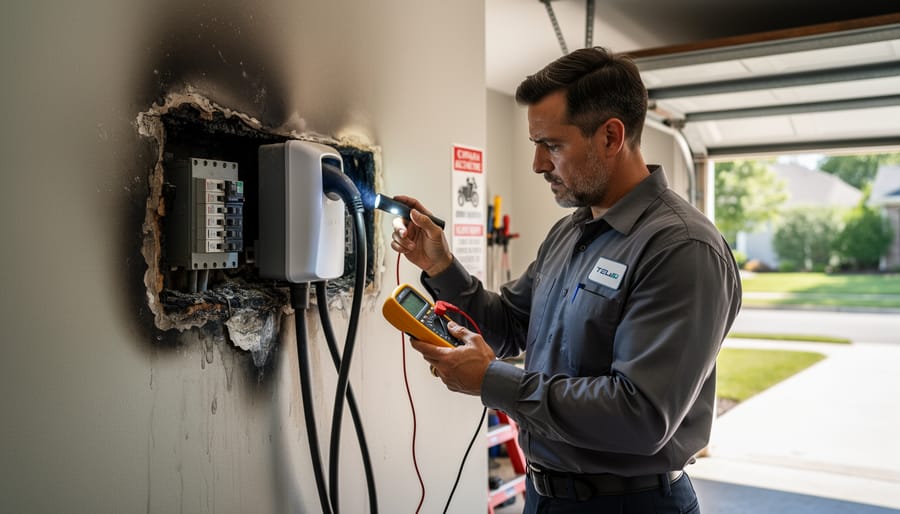
Following any fire incident at a property with EV charging infrastructure, a thorough professional EV charger inspection by certified electricians and specialized EV equipment technicians becomes essential before resale. These inspections serve dual purposes: ensuring safety compliance and providing necessary documentation for insurance claims and prospective buyers.
Certified inspectors examine critical components including wiring integrity, circuit breaker functionality, ground fault protection systems, and charging station hardware for heat damage, smoke residue, or structural compromise. They assess whether thermal stress has degraded insulation, corroded connection points, or weakened protective enclosures. Advanced diagnostic tools measure electrical resistance, continuity, and voltage regulation to identify hidden damage that visual inspections might miss.
Documentation requirements typically include detailed inspection reports with photographic evidence, electrical system testing results, code compliance certifications, and repair or replacement recommendations. Insurance providers often mandate these assessments before settling claims, while future buyers rightfully expect comprehensive records demonstrating either successful remediation or proper system removal.
For properties where charging equipment survived undamaged or has been professionally restored, inspection certificates become valuable selling points, demonstrating commitment to safety and potentially preserving the property’s appeal to the growing EV owner demographic. This proactive approach transforms potential liability into documented assurance, supporting transparent disclosure while maintaining the sustainability features that forward-thinking buyers increasingly prioritize in modern residential properties.
Replacement vs. Repair Decisions
Determining whether to repair or replace fire-damaged EV charging equipment requires a comprehensive safety and economic evaluation. This decision significantly impacts both the resale value of your property and potential liability exposure.
Safety considerations must take precedence over cost factors. Any charging equipment exposed to fire temperatures exceeding 300°F typically requires complete replacement, as heat can compromise internal wiring, circuit boards, and safety mechanisms in ways that aren’t immediately visible. Professional electrical inspection following UL standards should assess the integrity of junction boxes, conduit systems, and wall connectors. Even if external damage appears minimal, internal components may have degraded thermal protection or ground fault detection capabilities.
From a cost-benefit perspective, replacement often proves more economical than extensive repairs when considering long-term liability. Modern Level 2 charging stations incorporate advanced safety features including arc fault detection, overcurrent protection, and smart monitoring capabilities that older or fire-damaged units lack. These technological advancements enhance property marketability to environmentally conscious buyers while reducing insurance concerns.
Insurance coverage typically favors replacement for fire-damaged electrical equipment, as partial repairs may void warranties and create documentation challenges during property disclosure. Buyers increasingly expect current-generation charging infrastructure with certified installation records, making the investment in new equipment a value-adding proposition.
Calculate replacement costs against repair estimates plus potential price reductions buyers might demand for aging or compromised systems. In most scenarios involving fire exposure, complete replacement with properly certified equipment provides superior risk mitigation and return on investment, positioning your property competitively in the growing EV-oriented real estate market.
Disclosure Obligations and Legal Considerations
What You Must Disclose to Potential Buyers
Transparency is paramount when selling a fire-damaged property with EV charging infrastructure. You must provide complete fire incident documentation, including the fire marshal’s report, origin and cause determination, and whether the EV charging system played any role in the incident. All electrical system repairs require detailed disclosure, particularly work performed on circuits connected to charging equipment, panel upgrades, and inspection certificates confirming code compliance post-restoration.
The current status of EV charging equipment demands clear communication. Specify whether the charging station was damaged, removed, or replaced with upgraded technology. If the system remained operational or was professionally reinstalled, provide manufacturer specifications, safety certifications, and warranty information. Modern charging systems incorporate advanced safety features like ground fault protection and thermal monitoring that significantly reduce fire risk compared to older equipment.
Prospective buyers need access to comprehensive inspection reports from licensed electricians who evaluated both the charging infrastructure and the home’s electrical capacity. Include documentation of any electrical system modernization performed during restoration, as contemporary installations often exceed minimum code requirements. This forward-thinking approach demonstrates that properly maintained EV charging infrastructure represents sustainable home technology rather than liability, potentially appealing to environmentally conscious buyers seeking properties equipped for electric vehicle adoption.
Protecting Yourself from Future Liability
Comprehensive documentation is your strongest defense against future liability when selling a fire-damaged property with EV charging infrastructure. Begin by assembling a complete disclosure package that includes the original fire incident report, insurance claim documentation, and detailed records of all post-fire inspections. Obtain written certification from licensed electricians confirming that repaired or replacement charging equipment meets current electrical codes and safety standards. If you’ve upgraded to modern Level 2 charging systems with advanced safety features like ground fault protection and thermal monitoring, ensure these certifications specifically mention these protective technologies.
Transfer all manufacturer warranties and service agreements to the new owner, providing clear documentation of warranty terms and coverage periods. This transparency demonstrates good faith and shifts ongoing equipment support to the manufacturer. Consider purchasing an extended home warranty that explicitly covers the charging infrastructure, offering additional buyer protection.
Consult with a real estate attorney to draft appropriate disclosure language that accurately represents the property’s history without creating unnecessary alarm. Professional legal guidance ensures you meet state-specific disclosure requirements while framing the charging equipment as professionally restored, code-compliant infrastructure. Request that buyers acknowledge receipt of all charging system documentation in writing, creating a clear record that protects you from claims of inadequate disclosure while positioning the charging capability as a valuable, properly maintained sustainable energy asset.
How EV Charging Affects Property Valuation Post-Fire
Market Demand for EV-Ready Properties
The residential real estate market is experiencing a measurable shift toward properties equipped with electric vehicle charging infrastructure. Recent industry data indicates that homes with installed EV charging stations command a premium of 3-5% in markets with higher EV adoption rates, reflecting growing buyer demand for move-in-ready sustainability features.
This trend is particularly pronounced among millennial and Gen Z homebuyers, who prioritize environmental considerations and future-proofing in their purchasing decisions. As electric vehicle sales continue their upward trajectory—with projections suggesting EVs will represent 50% of new car sales by 2030—properties with existing charging capabilities offer immediate utility and long-term value retention.
For sellers of fire-damaged properties, this market dynamic presents a strategic opportunity. Installing or upgrading to modern, code-compliant EV charging infrastructure during post-fire renovations can differentiate the property in competitive markets. Environmentally conscious purchasers view such installations as evidence of forward-thinking property management and reduced future renovation costs.
Real estate professionals report that listings highlighting Level 2 charging stations receive increased interest from qualified buyers, particularly in metropolitan areas with established EV adoption. The key differentiator lies in demonstrating that charging systems meet current safety standards and include proper electrical certification—addressing potential concerns while capitalizing on cutting-edge technology that appeals to sustainability-focused buyers seeking practical, innovative home features.
Cost-Benefit Analysis of Repair vs. Removal
When evaluating whether to restore or remove fire-damaged EV charging infrastructure, a thorough cost-benefit analysis proves essential for maximizing property value and minimizing liability exposure.
Certified restoration typically ranges from $800 to $3,500, depending on damage severity and equipment type. This investment includes electrical system inspection, circuit replacement, charging unit refurbishment or replacement, and documentation confirming compliance with current National Electric Code standards. Professional restoration provides clear liability protection through certified safe operation and often preserves manufacturer warranties on newer equipment.
Alternatively, complete removal costs between $300 and $800, eliminating immediate safety concerns but forfeiting potential market advantages. Properties with operational Level 2 charging infrastructure can command 2-5 percent premiums among sustainability-focused buyers, particularly in markets with high EV adoption rates. However, this advantage only materializes with properly certified equipment accompanied by comprehensive documentation.
The optimal decision depends on three factors: local EV ownership demographics, property price point, and damage extent. In regions exceeding 8 percent EV market penetration, restoration generally offers superior return on investment. For extensive fire damage requiring complete electrical system overhaul, removal followed by disclosure of available electrical capacity for future installation often presents the most economical approach. Consider engaging energy consultants to evaluate your specific situation, ensuring decisions align with both financial objectives and emerging sustainable transportation infrastructure standards.
Upgrading to Modern Fire-Safe EV Charging Systems
Next-Generation Safety Features
Modern EV charging installations now incorporate multiple layers of intelligent safety technology that substantially reduce fire risk compared to earlier systems. At the forefront are DC monitoring systems that provide real-time detection of electrical anomalies, including ground faults, arc faults, and current imbalances that could indicate deteriorating connections or insulation breakdown. These IoT-enabled platforms continuously analyze charging patterns and automatically disconnect power when parameters deviate from safe operating ranges.
Smart circuit protection has evolved beyond traditional breakers to include adaptive load management systems that prevent electrical overload by dynamically adjusting power distribution based on household demand. Advanced thermal management incorporates temperature sensors at critical connection points, monitoring heat signatures that precede most electrical failures. These sensors communicate with building management systems, enabling proactive maintenance before problems escalate.
For properties with fire history, these next-generation features provide measurable risk reduction that can be documented for insurers, inspectors, and prospective buyers. When properly installed by certified professionals, modern charging infrastructure includes fail-safe mechanisms and remote diagnostic capabilities that establish a clear safety record, transforming potential liability into a verifiable asset for resale.
Grid-Integrated Solutions for Enhanced Safety
Modern EV charging systems increasingly incorporate sophisticated grid-integrated technologies that significantly enhance electrical safety, particularly relevant when installing charging infrastructure in previously fire-damaged properties. Energy storage integration allows charging stations to buffer power delivery, reducing sudden electrical surges that can stress compromised wiring systems. These battery-backed solutions monitor power quality in real-time, automatically disconnecting when detecting irregularities such as voltage fluctuations or ground faults that might indicate underlying electrical damage from previous fires.
Grid balancing technology further protects rehabilitated properties by distributing electrical loads more evenly throughout the day. Smart charging systems communicate with the grid to optimize charging times, preventing concentration of high-power draw during peak hours when electrical systems face maximum stress. This distributed approach minimizes thermal buildup in circuits and connection points, areas particularly vulnerable in structures with fire history.
Contemporary systems also feature advanced circuit monitoring with predictive analytics, identifying potential failure points before they become hazardous. For properties recovering from fire damage, these multi-layered safety protocols provide homeowners and prospective buyers with measurable assurance that modern charging infrastructure actively contributes to electrical system stability rather than compromising it.
Marketing Your Fire-Restored Property with EV Charging
Positioning your fire-restored property as a modern, sustainable investment requires strategic messaging that emphasizes transparency, innovation, and environmental responsibility. Begin by highlighting the comprehensive restoration process, documenting how the property was rebuilt to current building codes and equipped with certified, properly inspected EV charging infrastructure. This narrative transforms a challenging situation into a compelling story of resilience and forward-thinking upgrades.
Professional photography and virtual tours should showcase the newly installed EV charging station as a premium amenity alongside other renovated features. Emphasize that all electrical systems, including charging infrastructure, have undergone rigorous safety inspections and carry current certifications. This reassures potential buyers while positioning the property within the growing market of energy-efficient homes.
Target marketing efforts toward environmentally conscious professionals and electric vehicle owners who value sustainability. Highlight cost savings from built-in charging capabilities, eliminating the need for buyers to undertake separate installation projects. Include documentation of all permits, inspections, and manufacturer warranties in your listing materials to build confidence.
Consider obtaining a home energy rating or green building certification to independently validate your property’s modern infrastructure. Partner with real estate agents experienced in marketing renovated properties and sustainable features who can effectively communicate the value proposition to qualified buyers. Transparency about the property’s history, combined with verifiable evidence of superior restoration standards and cutting-edge technology integration, positions your fire-restored home as a premium, future-ready investment rather than a compromised property.
Selling a fire-damaged property with EV charging infrastructure need not be an insurmountable challenge. When approached strategically with qualified professionals, the restoration process presents a valuable opportunity to transform what initially appears as a liability into a compelling modern asset. The key lies in comprehensive electrical system assessment, adherence to current National Electrical Code standards, and installation of cutting-edge charging technology that exceeds baseline safety requirements.
Professional restoration guided by licensed electricians experienced in both fire remediation and EV charging systems ensures that all components meet or surpass contemporary safety benchmarks. This includes upgraded circuit protection, ground fault monitoring, and thermal management systems that weren’t necessarily present in older installations. Such improvements, when properly documented through detailed inspection reports and safety certifications, provide prospective buyers with confidence in the property’s electrical integrity.
Transparency remains paramount throughout the resale process. Full disclosure of fire damage history, coupled with comprehensive documentation of restoration work and third-party verification of charging system functionality, builds trust and mitigates legal risks. Modern EV charging installations incorporating smart monitoring capabilities, automatic fault detection, and compliance with the latest safety protocols represent significant value-adds in today’s sustainability-focused real estate market.
Post-fire renovation should be viewed not merely as damage repair, but as an enhancement opportunity. By investing in professionally certified charging infrastructure restoration, property owners can appeal to the growing demographic of electric vehicle owners while demonstrating commitment to safety and innovation—ultimately positioning their property competitively in an evolving marketplace.
