

Why PBN Links Could Accelerate Your EV Charging Company’s Digital Growth
Living Links through Private Blog Networks deliver measurable SEO advantages for electric vehicle charging companies navigating an increasingly competitive digital marketplace. Deploy strategically placed backlinks from automotive, renewable energy, and technology-focused PBN domains to elevate your charging station network above local competitors in Google’s search rankings. Target high-value commercial keywords like “EV charging stations near me” and “fast charging network” to capture customers actively seeking charging solutions in specific geographic markets.
Position your charging infrastructure as the preferred choice by leveraging PBN authority to accelerate domain credibility, particularly crucial for newer companies competing against established energy providers. Build topical relevance through contextually appropriate blog content that connects sustainable transportation themes with your charging technology offerings, creating natural link placement opportunities that search algorithms recognize as authoritative signals.
The EV charging sector faces unique digital marketing challenges: emerging market competition, geographically dispersed service areas, and technical product specifications that require sophisticated SEO strategies. Traditional link-building methods often prove too slow for companies racing to establish market presence before competitors saturate local search results. PBN links provide immediate ranking improvements while organic outreach campaigns develop, enabling charging networks to capture market share during critical growth phases.
This approach addresses the fundamental challenge facing EV infrastructure providers: visibility at the precise moment potential customers need charging solutions. When implemented with technical precision and industry-specific content strategies, PBN links create the digital foundation necessary for charging companies to convert search visibility into physical station utilization, directly impacting revenue generation and network expansion capabilities.
Understanding PBN Links in the Energy Sector Context

What Makes PBNs Different from Traditional Link Building
Traditional link building relies on organic outreach, guest posting, and relationship development—a process that can take months or years to generate meaningful results, particularly in specialized sectors. PBN links, by contrast, offer a fundamentally different approach centered on control and precision targeting.
The primary distinction lies in authority placement. With a PBN, companies can strategically position backlinks within contextually relevant, established domains rather than waiting for organic opportunities. For EV charging businesses operating in a niche market, this means linking from sites focused on sustainable transportation, renewable energy infrastructure, or electric vehicle technology—content environments that traditional outreach might struggle to access consistently.
PBNs provide immediate implementation capability. Instead of negotiating with external publishers or waiting for content approval, companies maintain direct control over anchor text, placement timing, and surrounding content quality. This proves particularly valuable when launching new charging station locations, announcing technological innovations, or responding to competitive market shifts.
The targeting precision also extends to geographic and demographic specificity. A PBN can include regional domains relevant to specific markets where charging infrastructure is expanding, creating localized authority signals that traditional link building campaigns would find difficult to replicate at scale. However, this control requires sophisticated technical understanding and adherence to search engine guidelines to ensure sustainable results.
The Relevance Factor for EV Charging Companies
For EV charging companies operating in the technical B2B space, topical relevance in link building carries significantly more weight than it does for general consumer products. Search engines like Google increasingly prioritize contextual signals when evaluating backlink authority, particularly for specialized industries like electric vehicle infrastructure. When a PBN link originates from a website covering energy innovation, sustainable transportation, or electrical grid technology, it sends stronger relevance signals than generic high-authority links from unrelated sectors.
This specificity matters because EV charging businesses target a distinct audience: commercial property developers, fleet managers, municipal planners, and sustainability officers who research technical specifications and implementation requirements. These decision-makers conduct detailed searches using industry-specific terminology, and search algorithms recognize the semantic connections between quality content on charging infrastructure and thematically aligned backlink sources. Industry-specific PBN networks can address niche topics like Level 2 versus DC fast charging, grid integration challenges, or payment system interoperability—creating contextual bridges that general SEO strategies often miss. For companies offering cutting-edge charging solutions, this targeted approach delivers better search visibility where it matters most: at the critical research phase of the purchasing journey.
Key Benefits of PBN Links for EV Charging Businesses
Accelerated Domain Authority in Emerging Markets
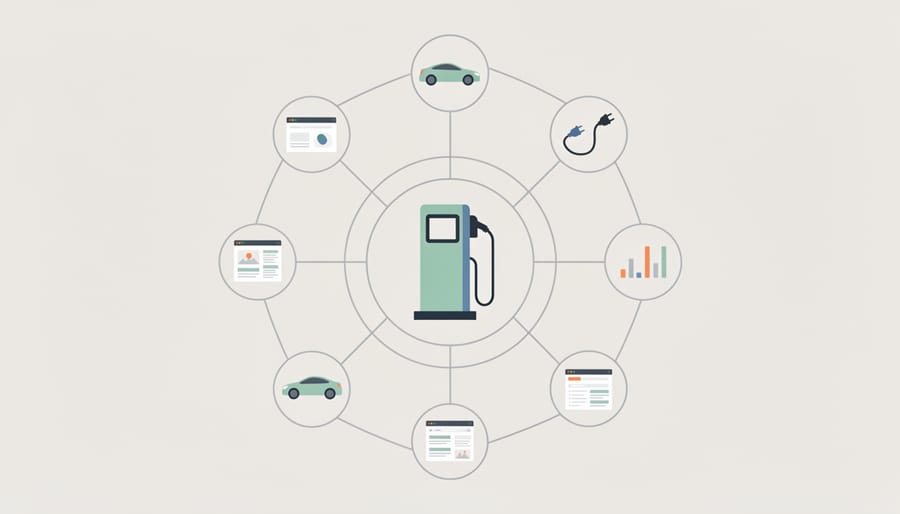
The electric vehicle charging industry is experiencing unprecedented growth, particularly in emerging markets where infrastructure development is rapidly accelerating. For newer EV charging companies entering this competitive landscape, establishing domain authority quickly is essential to capture market share before larger, established players dominate the space. Private Blog Networks (PBNs) offer a strategic advantage by providing immediate backlink equity that would typically take years to accumulate through organic methods.
In fast-moving sectors like EV charging infrastructure, time is a critical factor. Traditional link-building approaches—guest posting, content marketing, and organic outreach—require extensive resources and patience. PBN links bypass this lengthy process by leveraging established domains with existing authority, allowing new companies to compete on search engine results pages alongside industry veterans within months rather than years.
This accelerated authority is particularly valuable when targeting location-specific keywords for charging station installations or regional service areas. Since many EV charging companies operate in specific geographic markets, PBN links can be strategically positioned to boost local search visibility and establish topical relevance in sustainability and clean energy sectors.
However, the effectiveness of this approach depends on using high-quality, contextually relevant PBN domains that align with energy, transportation, or environmental themes. Generic or low-quality networks provide minimal benefit and carry substantial risk of search engine penalties that could permanently damage a company’s digital presence.
Targeted Geographic and Industry Positioning
Private Blog Networks offer EV charging companies a strategic advantage in establishing geographically targeted and industry-specific backlink profiles that directly align with their service territories and market positioning. This precision targeting enables charging infrastructure providers to strengthen their digital presence in specific metropolitan areas, highway corridors, or regional markets where they operate or plan to expand.
By leveraging location-focused domains within a PBN, companies can create authoritative content that references local energy initiatives, municipal charging programs, and regional sustainability efforts. For instance, a charging network expanding into the Pacific Northwest can develop backlinks from sites emphasizing that region’s clean energy policies and environmental priorities. This geographical specificity signals search engines about service area relevance while connecting with local decision-makers and fleet operators.
Industry positioning becomes equally refined through PBN deployment. Charging companies can cultivate backlink profiles from domains covering adjacent sectors such as renewable energy integration, smart grid technology, fleet electrification, and commercial EV charging solutions. This cross-sector visibility establishes thought leadership within the broader energy transition ecosystem.
The ability to control messaging across network sites ensures consistent brand positioning while addressing diverse audience segments—from municipal procurement officers to commercial property managers—each requiring tailored information architecture. This targeted approach transforms generic SEO efforts into precision marketing instruments aligned with specific infrastructure deployment strategies and market penetration goals.
Control Over Anchor Text and Messaging
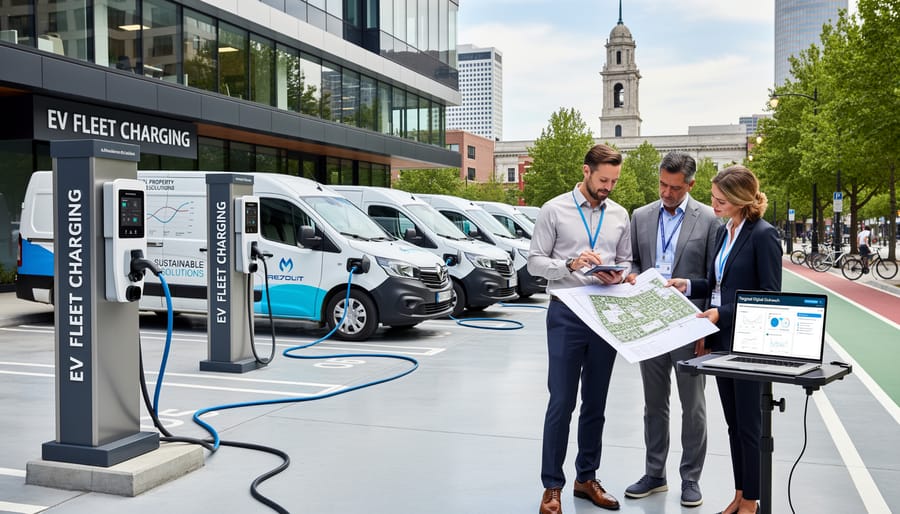
One of the most compelling advantages of utilizing a PBN for EV charging companies is the precise control over anchor text distribution, enabling targeted optimization for high-value commercial keywords. Unlike organic link building where anchor text is determined by external publishers, PBN links allow strategic placement of exact-match and partial-match anchors for commercially valuable terms like “commercial EV charging solutions,” “workplace charging infrastructure,” or “DC fast charger installation.”
This control becomes particularly valuable when competing for keywords with strong purchase intent and substantial search volume. By strategically distributing anchor text across your PBN properties, you can signal relevance to search engines for specific service offerings or geographic markets. For instance, a company expanding into commercial installations can create contextual links with anchors emphasizing enterprise solutions, while simultaneously building authority for technical specifications that resonate with facility managers and procurement professionals.
The messaging surrounding these links can also be tailored to address specific pain points within the EV charging ecosystem, such as grid integration challenges, energy management capabilities, or sustainability certifications. This targeted approach allows companies to craft narratives that position their solutions as innovative answers to emerging industry needs, while simultaneously building search visibility for terms that drive qualified leads and commercial inquiries.
Faster Results in Time-Sensitive Markets
The competitive landscape of EV infrastructure development moves at an unprecedented pace, where securing municipal contracts, partnership agreements, and installation permits often depends on digital visibility at critical decision-making moments. PBN links offer a strategic advantage by accelerating search engine rankings faster than traditional white-hat SEO methods, which typically require 6-12 months to show meaningful results.
In time-sensitive scenarios—such as responding to requests for proposals or competing for prime charging station locations—companies need immediate online authority. A well-structured PBN can establish topical relevance and domain authority within weeks rather than months, positioning your company prominently when procurement officials and facility managers conduct their initial research. This accelerated timeline proves particularly valuable when bidding cycles close quickly or when first-mover advantage determines market penetration in emerging metropolitan areas.
The rapid ranking improvements from PBN deployment allow EV charging companies to capitalize on trending search queries related to new electric vehicle models, legislative incentives, or infrastructure funding announcements. When government initiatives or corporate sustainability mandates create sudden demand spikes, your enhanced visibility ensures potential clients discover your solutions precisely when purchase intent peaks, converting time-sensitive opportunities into secured contracts before competitors gain traction.
Supporting Content for Technical Products
PBN networks enable EV charging companies to build comprehensive educational content ecosystems that demystify technical concepts for various stakeholder groups. By distributing explanatory content across multiple properties, businesses can address different knowledge levels simultaneously—from consumers seeking basic charging information to engineers requiring detailed specifications on complex charging technologies.
These content networks prove particularly valuable when explaining IoT integration in modern charging infrastructure. One PBN site might focus on consumer benefits of smart charging, while another targets facility managers with grid management insights and load balancing strategies. This segmented approach ensures technical accuracy without overwhelming non-specialist audiences.
For emerging technologies like vehicle-to-grid (V2G) systems and bidirectional charging, PBN properties allow companies to create progressive learning pathways. Introductory content on satellite sites can guide readers toward more advanced resources, establishing the parent brand as a comprehensive knowledge authority. This educational scaffolding builds trust across diverse audience segments, from sustainability advocates exploring environmental benefits to energy professionals evaluating infrastructure investments. The distributed content model also provides flexibility to update technical information rapidly as charging standards and protocols evolve.
Strategic Implementation Considerations
Quality Metrics That Matter for Energy Companies
Selecting high-quality PBN domains requires careful evaluation of several critical metrics to ensure they deliver meaningful SEO value for EV charging companies. The most important consideration is topical relevance—domains with historical content related to energy infrastructure, automotive technology, electric vehicles, renewable power, or sustainability sectors carry significantly more weight than unrelated sites. Search engines prioritize contextual connections, so a domain previously covering solar energy installations or transportation innovation will provide more authentic link equity than one focused on unrelated industries.
Domain authority metrics serve as fundamental quality indicators. Look for domains with Domain Authority scores above 30, established backlink profiles from reputable sources, and clean penalty-free histories. Tools like Ahrefs or Moz can reveal whether a domain has maintained consistent traffic patterns and hasn’t been flagged for manipulative practices. Age matters too—domains operational for five years or more typically demonstrate greater trustworthiness to search algorithms.
Content quality standards cannot be compromised. Each PBN site should feature well-researched articles that provide genuine value to readers interested in clean energy solutions and electric mobility. Content should maintain technical accuracy while remaining accessible, incorporating industry-specific terminology like charge point operators, grid integration, and demand response systems with appropriate context. Articles must be original, comprehensive, and updated regularly to avoid the thin content penalties that plague low-quality networks.
Finally, examine the domain’s technical health including site speed, mobile responsiveness, and secure HTTPS protocols—factors that reflect modern web standards and user experience priorities essential for maintaining credibility in the competitive energy technology landscape.
Balancing PBN Links with Organic Link Building
While PBN links can provide strategic SEO value, they should function as supplementary components within a comprehensive link building ecosystem rather than your primary strategy. For EV charging companies operating in a rapidly evolving sector, the foundation of your backlink profile must consist of authentic, earned links that reflect genuine industry recognition and partnerships.
Begin by prioritizing organic link building through strategic collaborations with automotive manufacturers, renewable energy providers, and municipal sustainability programs. These partnerships naturally generate high-quality backlinks while establishing your company as a credible industry participant. Pursue guest contributions to respected energy sector publications, technical journals, and sustainability-focused media outlets where your expertise on charging infrastructure and grid integration can provide genuine value to their audiences.
Earned media coverage remains invaluable for EV charging companies given the public interest in clean transportation solutions. Develop newsworthy content around installation milestones, technological innovations, or community impact initiatives that attract attention from journalists and bloggers without solicitation. These organic mentions carry significant authority signals that search engines recognize and reward.
When integrating PBN links, use them strategically to support specific pages or keywords where organic link acquisition proves challenging, such as highly competitive local service areas or technical product pages. The ratio should heavily favor organic links, with PBN links comprising no more than 15-20 percent of your overall link acquisition activity. This balanced approach ensures sustainable SEO performance while minimizing risk exposure, allowing your company to maintain credibility within both the digital marketing landscape and the broader energy sector community.

Risk Awareness and Best Practices
While Private Blog Networks can offer strategic advantages for EV charging companies seeking to enhance their digital presence, understanding the associated risks is essential for making informed decisions. Search engines, particularly Google, explicitly prohibit manipulative link schemes designed to artificially inflate rankings. Companies discovered using low-quality PBNs may face severe penalties, including significant ranking drops or complete removal from search results—consequences that could devastate visibility precisely when the EV charging industry is experiencing exponential growth.
The primary risk stems from footprint detection. Search engines employ sophisticated algorithms to identify interconnected websites sharing hosting providers, IP addresses, domain registrars, or content patterns. When these connections become apparent, the entire network loses credibility, potentially harming every connected site. For EV charging businesses investing substantially in market positioning, this represents an unacceptable vulnerability that could undermine years of brand-building efforts.
However, responsible implementation can significantly minimize exposure. Quality consistently outweighs quantity in sustainable link-building strategies. Rather than pursuing hundreds of low-grade connections, focus on establishing a limited number of genuinely valuable websites offering relevant content about sustainable energy, electric vehicle infrastructure, or environmental technology. Each site should maintain unique hosting environments, distinct content voices, and natural linking patterns that don’t exclusively point toward your primary domain.
Diversification serves as your most effective safeguard. Never rely solely on PBN links for your search visibility. Integrate them strategically within a comprehensive approach encompassing organic content marketing, legitimate partnerships with industry publications, participation in energy sector forums, and earned media coverage. This balanced methodology ensures that if any component faces challenges, your overall digital ecosystem remains resilient.
Transparency within your organization also matters. Ensure decision-makers understand both potential benefits and risks, allowing for informed resource allocation. Consider consulting SEO professionals experienced specifically with energy sector challenges who can provide guidance aligned with current search engine guidelines.
Ultimately, the question isn’t whether PBN links carry risks—they unquestionably do—but whether your implementation strategy incorporates sufficient quality controls, diversification, and ongoing monitoring to justify their inclusion in your broader marketing infrastructure. For EV charging companies prioritizing long-term sustainability over short-term gains, proceeding cautiously with rigorous standards offers the most prudent path forward.
PBN links can serve as a tactical instrument for EV charging companies navigating the competitive landscape of sustainable transportation infrastructure. When implemented strategically, these networks offer accelerated visibility that can support market penetration objectives during critical growth phases. However, this approach demands careful consideration within the broader context of digital marketing fundamentals and industry positioning.
For organizations in the electric vehicle charging sector, sustainable growth requires a multifaceted strategy that extends beyond any single tactic. While PBN links may provide short-term ranking improvements, long-term success depends on integrating diverse marketing channels including content marketing, technical SEO optimization, strategic partnerships, and authentic link-building practices. The cutting-edge technology that defines modern EV charging infrastructure deserves equally innovative and transparent marketing approaches.
Companies must weigh the immediate benefits of PBN implementation against potential algorithmic penalties and reputational considerations. The energy sector increasingly values transparency and sustainability—principles that should extend to digital marketing practices. A comprehensive approach combining high-quality content creation, industry thought leadership, stakeholder engagement, and compliance with search engine guidelines delivers more resilient results.
Ultimately, PBN links represent one option within a spectrum of SEO strategies. EV charging companies committed to long-term market leadership should prioritize building genuine authority through valuable content, technological innovation, and meaningful connections with environmental advocates and energy professionals. Strategic implementation aligned with business ethics and industry standards ensures sustainable digital presence that supports organizational growth objectives.
